
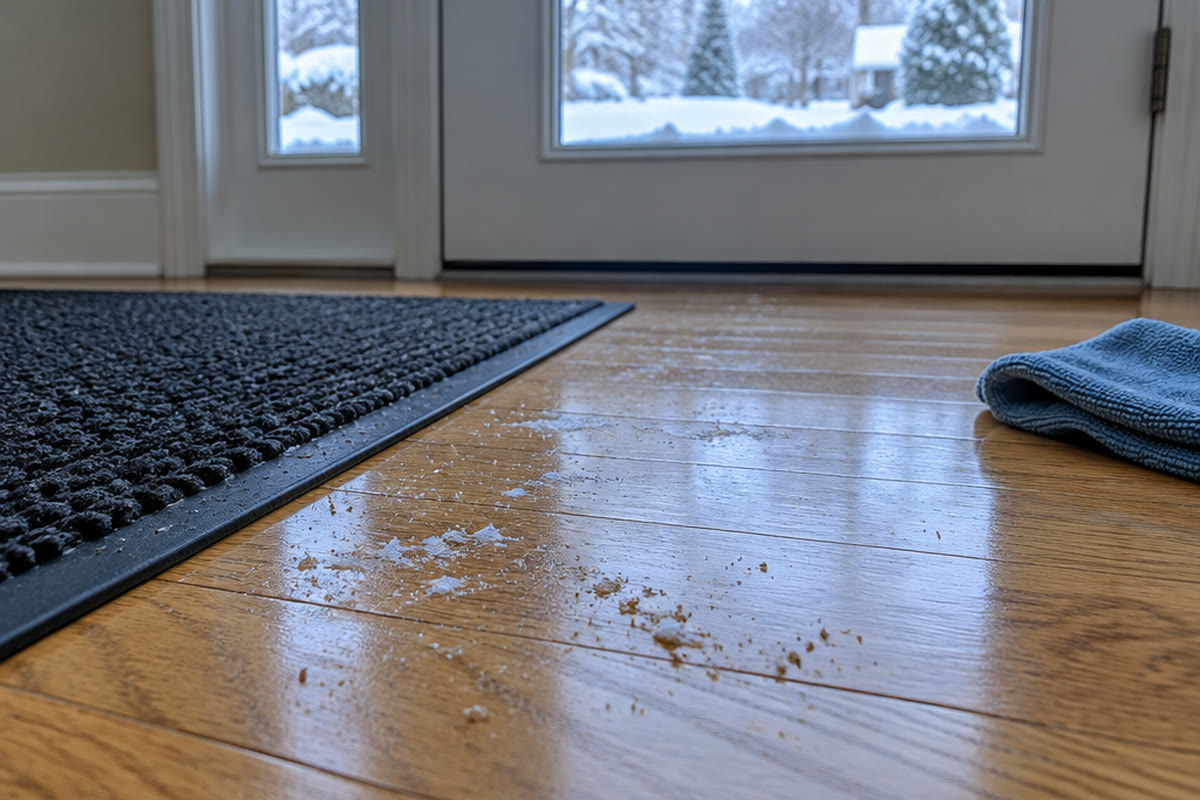
To protect floors from winter salt and sand, stop it at the door with a scraper mat, an absorbent mat and a boot tray, then sweep or vacuum the entry daily and damp-mop salty spots before they dry. Grit scratches finishes and dried salt leaves a white film that dulls wood, tile and stone. A regular cleaning schedule through winter keeps the damage from building.
Why are salt and sand so hard on floors?
Through a New Hampshire winter, roads, driveways and sidewalks are treated with salt and sand to keep them passable. Both come inside on boots, paws and the wheels of anything rolled through the door. Sand acts like sandpaper underfoot, wearing down the finish on wood and scratching softer surfaces. Salt dissolves in meltwater, then dries into a white, chalky residue that dulls finishes and can stiffen carpet fibers. Indoor heating dries everything quickly, so salty puddles become residue fast.
How should you set up the entry for winter?
- A scraper mat outside every door you use, to knock off snow, sand and slush.
- A long absorbent mat inside, so people take several steps on it before reaching the floor.
- A boot tray with a raised lip to hold meltwater and salt.
- A spot to sit and take boots off, so wet boots do not travel further into the house.
- An old towel by the door for dog paws after a walk on treated sidewalks.
Wash or replace mats when they are saturated. A soaked mat stops absorbing and starts spreading salt water around.
How do you remove salt residue from floors?
Start dry: sweep or vacuum first to lift sand and loose salt, since mopping over grit just drags it across the floor. Then damp-mop with warm water and a cleaner suitable for your floor type. Salt residue often takes more than one pass, and rinsing with clean water afterwards helps stop the film from coming back.
- Wood: use a damp mop, never a soaking one, and dry the floor afterwards. Follow the floor maker’s care instructions.
- Tile and grout: salt can collect in grout lines; a soft brush helps.
- Natural stone: some stone is sensitive to acidic cleaners, so check the care instructions before using anything other than a pH-neutral product.
- Carpet and rugs: let salty spots dry, vacuum, then blot with warm water and a clean cloth.
A simple winter routine
Daily: shake out the mats, empty the boot tray and sweep or vacuum the entry. After a salty day: damp-mop the entry and any hard floors people walk across in boots. Weekly: mop the kitchen and entry fully, wash the boot tray and check rugs near doors.
Short winter days make it easy to miss salt film, since it is hardest to see in low light. Check floors near the door in daylight on weekends, and you will spot the dull patches before they spread.
When should you bring in help?
Winter is when a recurring cleaning schedule pays off, because floors that are cleaned every week or two never build up a thick layer of residue. If salt and sand have already worked their way through the house, a deep clean (starting from $175) resets things, and whole-home baseboards ($50 add-on) catch the grit that collects along the edges. Prices are New Hampshire Area Cleaners’ own, and the final price is confirmed when you book. Choose Book Now to schedule.
Frequently asked questions
How do I get white salt stains off my floor?
Sweep or vacuum first, then damp-mop with warm water and a cleaner suitable for the floor, and rinse with clean water. Stubborn film may take more than one pass.
Does road salt damage hardwood floors?
It can. Salt residue dulls the finish and sand scratches it, and standing meltwater is bad for wood. Catching both at the door and cleaning the entry often is the best protection.
How often should I mop in winter?
Damp-mop the entry after salty days and the main hard floors at least weekly. Daily sweeping or vacuuming at the door matters most.
Should I use a boot tray or a mat?
Both. The mat catches what comes off on footsteps, and the boot tray holds wet boots so salty meltwater stays off the floor.